YouTube monetization in 2027: New creators will need 8,000 watch hours or 20 million Shorts views for ad revenue
Starting Feb. 1, 2027, YouTube doubles the entry thresholds for ad and Premium revenue. Here is what changes, what stays the same and what existing partners must do by Jan. 31.

Drafted with AI assistance. Reported and edited by ChorusWire Staff. How we use AI
What we know
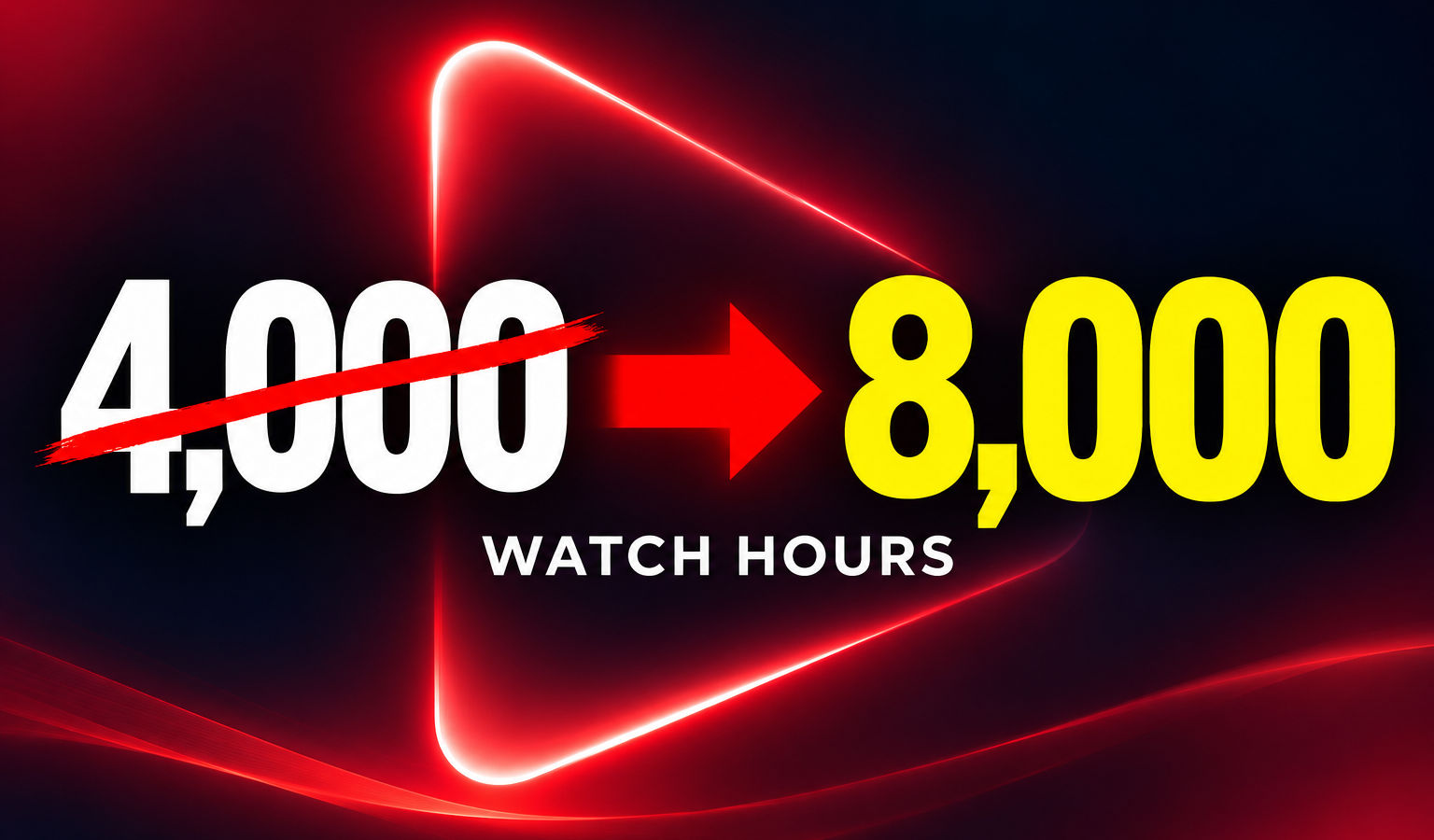
- From Feb. 1, 2027, new YouTube Partner Program applicants need 1,000 subscribers plus 8,000 qualified watch hours in 365 days or 20 million qualified Shorts views in 90 days, per YouTube Help.
- Until then the bar is 1,000 subscribers plus 4,000 qualified watch hours in 12 months or 10 million qualified Shorts views in 90 days.
- Channels already in the program keep their status, YouTube says.
- The 500-subscriber tier for fan funding and Shopping is unchanged: 3,000 qualified watch hours in a year or 3 million qualified Shorts views in 90 days.
- Existing partners must accept updated terms in YouTube Studio by Jan. 31, 2027.
- From Feb. 1, 2027, monthly Shorts Creator Pool earnings require 10 million qualified Shorts views over the last 90 days.
YouTube will double the watch-time and Shorts-view thresholds for new creators who want ad and Premium revenue, starting Feb. 1, 2027. New applicants to the YouTube Partner Program will need 1,000 subscribers plus either 8,000 qualified watch hours in the last 365 days or 20 million qualified Shorts views in the last 90 days, according to YouTube’s Help page on the change.
Until then, the bar is 1,000 subscribers plus 4,000 qualified watch hours in the last 12 months, or 10 million qualified Shorts views in the last 90 days, YouTube’s eligibility page says. Channels already in the program keep their status.
What changes on Feb. 1, 2027
| Requirement for ads and Premium revenue | Until Jan. 31, 2027 | From Feb. 1, 2027 (new creators) |
|---|---|---|
| Subscribers | 1,000 | 1,000 |
| Long-form route | 4,000 qualified watch hours in the last 12 months | 8,000 qualified watch hours in the last 365 days |
| Shorts route | 10 million qualified Shorts views in the last 90 days | 20 million qualified Shorts views in the last 90 days |
Source: YouTube Help, read Nov. 16, 2026.
“If you are already in YPP, your status is not impacted by this update,” YouTube’s Help page says.
What does not change: the 500-subscriber tier
YouTube says there are no changes to eligibility for fan funding, YouTube Creator Partnerships or YouTube Shopping. Those features remain open to channels with 500 subscribers and either 3,000 qualified watch hours in the last year or 3 million qualified Shorts views in the last 90 days. Tubefilter reported that this tier also requires at least three qualified uploads in the past 90 days.
That earlier tier does not include ad revenue, and YouTube offers it only in the countries and regions it lists. Check that list before you plan around it.
What counts as a “qualified” hour or view
Qualified watch hours come from long-form videos set to public, YouTube’s eligibility page says. Private, unlisted and deleted videos, ad campaigns and Shorts do not count toward the watch-hour threshold. Qualified Shorts views come from public Shorts that appear in the Shorts feed.
Meeting a threshold does not guarantee entry. “Every channel that meets the threshold will go through a standard review process,” YouTube says.
What it means in plain numbers
By our math, 8,000 hours is 480,000 minutes of viewing. If the average view lasts four minutes, that is 120,000 long-form views in a year, up from 60,000 for the 4,000-hour bar. At a two-minute average, it is 240,000 views.
From Nov. 16, 2026, there are 77 days until Feb. 1, 2027.
Other changes existing partners should know
- Accept the new terms by Jan. 31, 2027. YouTube says creators must review and accept the updated terms in YouTube Studio by that date to keep fully monetizing. Creators who miss the deadline are not removed from the program, YouTube says: they stop earning from the affected features on Feb. 1, 2027, until they accept the terms.
- Shorts earnings need 10 million views. To earn each month from the Shorts Creator Pool, a creator will need to maintain 10 million qualified Shorts views over the last 90 days. YouTube says missing that mark does not remove a channel from the program or affect long-form earnings.
- A new activity rule. From Feb. 1, 2027, a channel counts as active if it has 1,000 qualified watch hours in the past 365 days, or 1 million qualified Shorts views in the last 90 days, or uploads two long-form videos or five Shorts every 90 days. YouTube says channels that fall below get an extended 90-day window to get back above the watch-hour or Shorts-view mark.
- Premium Lite. YouTube says it is expanding Premium Lite to every country where Premium is available.
If you apply before the deadline
YouTube says it typically reviews an application in about a month. A channel rejected for the first time can appeal within 21 days or reapply after 30 days.
The two YouTube Help pages we read do not say which thresholds apply to an application that is submitted before Feb. 1, 2027, but reviewed after it. We have not seen a published rule from YouTube on that point.
Why YouTube says it is doing this
YouTube’s Help page says the updates are meant “to reflect how viewers watch today.” Tubefilter reported on Aug. 10, 2026, that the change effectively doubles the entry requirements for ads and Premium revenue sharing, and that current partners will not have to meet the new thresholds.
What we don’t know
- How YouTube will treat applications still pending on Feb. 1, 2027.
- The details of the new Shorts incentive programs. YouTube says eligible creators will be notified as they launch.
See ChorusWire first in Top Stories. Add us as a preferred source on Google.
Add as preferred sourceSources
- YouTube Help: Changes to the YouTube Partner Program (accessed 2026-11-16)
- YouTube Help: YouTube Partner Program overview & eligibility (accessed 2026-11-16)
- Tubefilter: YouTube hopes stricter ad eligibility requirements will make Shorts revenue "meaningful" for creators (Aug. 10, 2026) (accessed 2026-11-16)
